
It is important to have public discussions of America’s historical failures and flaws
Dem/Lean Dem75%
Rep/Lean Rep60%
Source: Pew Research Center, Jan. 26, 2026
Chart: Americans Agree
Chart: Americans Agree
The conflict over how America’s story is told
Americans broadly agree history should cover both achievements and failures, yet the “history wars” are more intense than ever.
The modern history wars trace back to 1950s-era “patriotic history” being challenged in the 1960s–70s, followed by a conservative counter-movement in the 1980s.
More recent controversies—the Enola Gay exhibit, the 1619 Project, and the 1776 Commission—set the pattern for today’s battles.
The second Trump administration has escalated the conflict from public debate to direct government intervention in federally funded museums and parks.
Public opinion, including majority Republican support for open historical discussion, suggests the current push to limit debate lacks a durable constituency.
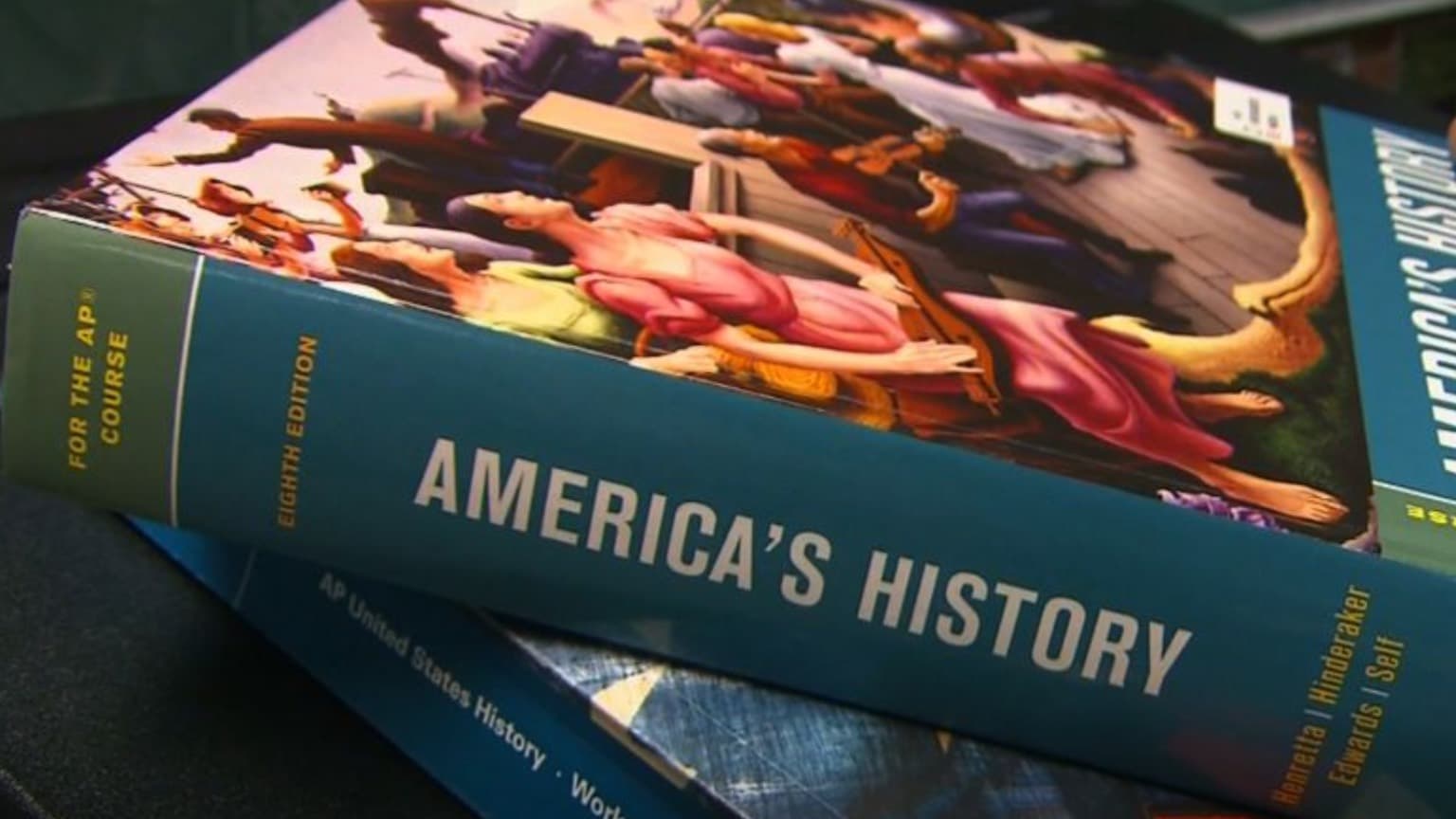
Image: CNN
In a recent national poll, Pew Research asked how important it is to have public discussions of America’s historical failures and flaws. Majorities of Democrats and Republicans said it was “extremely or very important”:
| Question | Thinking about American history, how important do you think it is to have public discussions about the country’s... |
| Item | Historical failures and flaws |
| Response | Extremely or very important |
| Poll Main Page | Majorities of Americans say it’s important to talk about the country’s historical successes and failures |
| Interview Period | Nov. 17, 2025 to Nov. 30, 2025 |
| Sample Size | 10,357 |
| Note | “Republicans” include Republicans and those who lean to the Republican party. “Democrats” include Democrats and those who lean to the Democratic party. |
| Policy Context | When this poll was conducted in November 2025, the Trump administration was in the midst of a campaign to alter how American history is portrayed at sites funded by the federal government. The effort started with a March 2025 executive order that said, “It is the policy of my Administration to restore Federal sites dedicated to history, including parks and museums, to solemn and uplifting public monuments that remind Americans of our extraordinary heritage, consistent progress toward becoming a more perfect Union, and unmatched record of advancing liberty, prosperity, and human flourishing.” Subsequent actions targeted content about slavery, racism, and other controversial aspects of U.S. history at the Smithsonian museum and national parks. |
| Insight | |
| Share Link | Historical failures and flaws : Pew Research Center, Jan. 26, 2026 |
In that same poll, nearly 70% of both Democrats and Republicans said it was extremely or very important that America’s successes and strengths have public discussion.
In other words, Americans across party lines think history should be taught with a balance of positive and critical perspectives. So how do we explain the history wars?
The term history wars refers to a long-running debate about how America’s story should be told, especially in government-funded schools, museums, and national parks. The debate is rarely about which facts are true; rather, it’s about which facts and people deserve emphasis, and what conclusions should be drawn from them.
Arguments about national history go back almost to the founding of the country, but the modern form of the history wars began after World War II. In the 1950s, textbooks and public institutions often presented a story centered on freedom, progress, and national unity. Difficult topics such as slavery, segregation, and the treatment of Native Americans were included but usually with little attention to the perspectives of the people who suffered under those systems. These topics tended to be described as problems the nation eventually overcame, rather than as central features of American history.
The 1960s and 1970s challenged this view. The civil rights movement demanded greater inclusion of Black history. Feminism demanded women’s history. The American Indian Movement demanded Native Americans’ story be told from their side. And the antiwar movement generated skepticism about official government narratives generally.
At the same time, academic historians were changing how they wrote history. Instead of focusing mainly on wars, presidents, and other political leaders, many scholars turned toward social history: the lives of workers, immigrants, women, and minority groups. Political activism and scholarly innovation reinforced each other. Howard Zinn’s A People’s History of the United States (1980) became the most widely read popularization of the new approach.
By the 1980s, a conservative counter-movement emerged. Allan Bloom’s The Closing of the American Mind (1987) argued that universities had abandoned a shared civic culture in favor of curricula shaped by ideology and identity politics. Other critics of the new historical approach said it treated the nation’s failures as more important than its achievements.
An early version of today’s history wars occurred in 1994. The federally funded Smithsonian National Air and Space Museum was preparing an exhibit, Enola Gay, named after the B-29 bomber that dropped an atomic bomb on Hiroshima on August 6, 1945. Alongside the restored aircraft, the planned exhibit would discuss the mission’s place in history, including the debate over whether dropping the bomb was necessary.
Veterans groups and members of Congress argued that the planned text portrayed the United States as morally suspect and second-guessed a decision that, in their view, helped end the war and saved the lives of American soldiers who would otherwise have been killed in an invasion of Japan. After several attempts to revise the script failed to resolve the dispute, the Smithsonian canceled the planned historical presentation in 1995 and instead displayed the restored aircraft with minimal interpretation.
A more recent controversy that continues to have repercussions is the 1619 Project. Published by the New York Times in 2019 and led by journalist Nikole Hannah-Jones, the 1619 Project was named for the year the first enslaved Africans arrived in what would later become the United States. The Project views U.S. history through the lens of slavery, often taking a critical view of figures and events that are traditionally portrayed in a more positive or heroic light.
Some schools incorporated the Project’s framework into their curricula, while critics saw it as symbolizing “woke” sensibilities taken too far. In response to the Project, the first Trump administration created the 1776 Commission in 2020. Its goal was to enable “a restoration of American education grounded in the principles of our founding that is accurate, honest, unifying, inspiring, and ennobling.” Its members were conservative activists and intellectuals.
The 1776 Commission released its report days before Trump left office in 2021. It called for a re-centering of American historical education on the nation’s founding principles, embodied in the Declaration of Independence and the Constitution. Near its conclusion, it declared, “Above all, we must stand up to the petty tyrants in every sphere who demand that we speak only of America’s sins while denying her greatness.”
Upon taking office, President Biden disbanded the commission and withdrew the report.
Upon returning to the presidency in January 2025, Trump issued an executive order that included re-establishing the 1776 Commission “to promote patriotic education.”
A few months later, Trump signed another executive order, Restoring Truth and Sanity to American History, announcing a policy…
…to restore Federal sites dedicated to history, including parks and museums, to solemn and uplifting public monuments that remind Americans of our extraordinary heritage, consistent progress toward becoming a more perfect Union, and unmatched record of advancing liberty, prosperity, and human flourishing.
What followed was a series of federal interventions in how American history is presented at government-funded institutions:
Removal of Trump Impeachment References. The Smithsonian National Museum of American History removed specific references to Donald Trump’s two impeachments from its “American Presidency” exhibit. The text was replaced with generic language about the history of the impeachment process, though the Smithsonian noted this change was “temporary.”
Withdrawal of National Portrait Gallery Exhibit. An exhibit planned for The National Portrait Gallery was withdrawn by the artist, Amy Sherald, after the Gallery raised concerns about a painting, Trans Forming Liberty, which depicts a Black transgender woman as the Statue of Liberty. Sherald had previously painted the official portrait of former First Lady Michelle Obama for the National Portrait Gallery.
Changes to National Park Exhibits. The Department of the Interior instructed the National Park Service to review interpretive materials at federally funded sites to ensure they presented what the administration called a “balanced and uplifting” account of American history. As of January 2026, the administration had ordered the removal or revision of dozens of signs and displays at national parks, including materials related to climate change, environmental protection, slavery, and Native American history.
These examples represent an escalation in the history wars. Whereas earlier conflicts were usually fought through public debate, academic argument, school-board battles, or congressional pressure, the second Trump administration is employing presidential authority—executive orders, funding conditions, and administrative review—to intervene in how public institutions explain the nation’s past.
The administration argues this is necessary because the cultural elites who control and curate those institutions are left-leaning and “woke.” Those so characterized say they are simply trying to communicate history in a more complete way.
So going back to where we began, if Americans broadly agree they want both the good and the bad, why are the history wars stronger than ever?
One reason is that the history wars aren’t fought by average Americans. The combatants are a relatively small number of academics, activists, and political elites vying for control of the national historical narrative. Often their incentives are to push the balance as far to their side as they can.
But even if the combatants were simply trying to find a workable balance rather than trying to “win” it, there would be no easy answers. How much weight should slavery receive relative to the founding ideals? How prominently should Native American displacement feature in a national park exhibit? These are judgment calls, not factual disputes, and they guarantee continuing conflict.
Worth noting, too, is that the two sides aren’t arguing symmetrically: Those who want a more inclusive and critical version of American history are arguing to expand the debate about good and bad; others tend toward minimizing or even omitting the debate to protect a more traditional “patriotic history.”
That asymmetry matters. Public opinion seems to support having the debate rather than limiting it. So although the current political moment has seen a move in the other direction, it’s a move that lacks a broad constituency. It even falls short of majority Republican support. This suggests overreach, not durable change.