
Praise the Pollsters
To those who measure public opinion for the public good, thank you
Key Points
Americans Agree depends on the work of independent pollsters who not only collect public-opinion data but also make it publicly available.
Polling as a public good has a long history, going back to the 1930s.
Today’s independent pollsters—those measuring public opinion neutrally, without a partisan agenda or backing—are carrying on the tradition.
It’s easy to take this for granted. But it’s real work to conduct and publish high-quality polls, only to give away the results and the information necessary to audit them.
So this is an opportunity to praise those who poll for the public good.
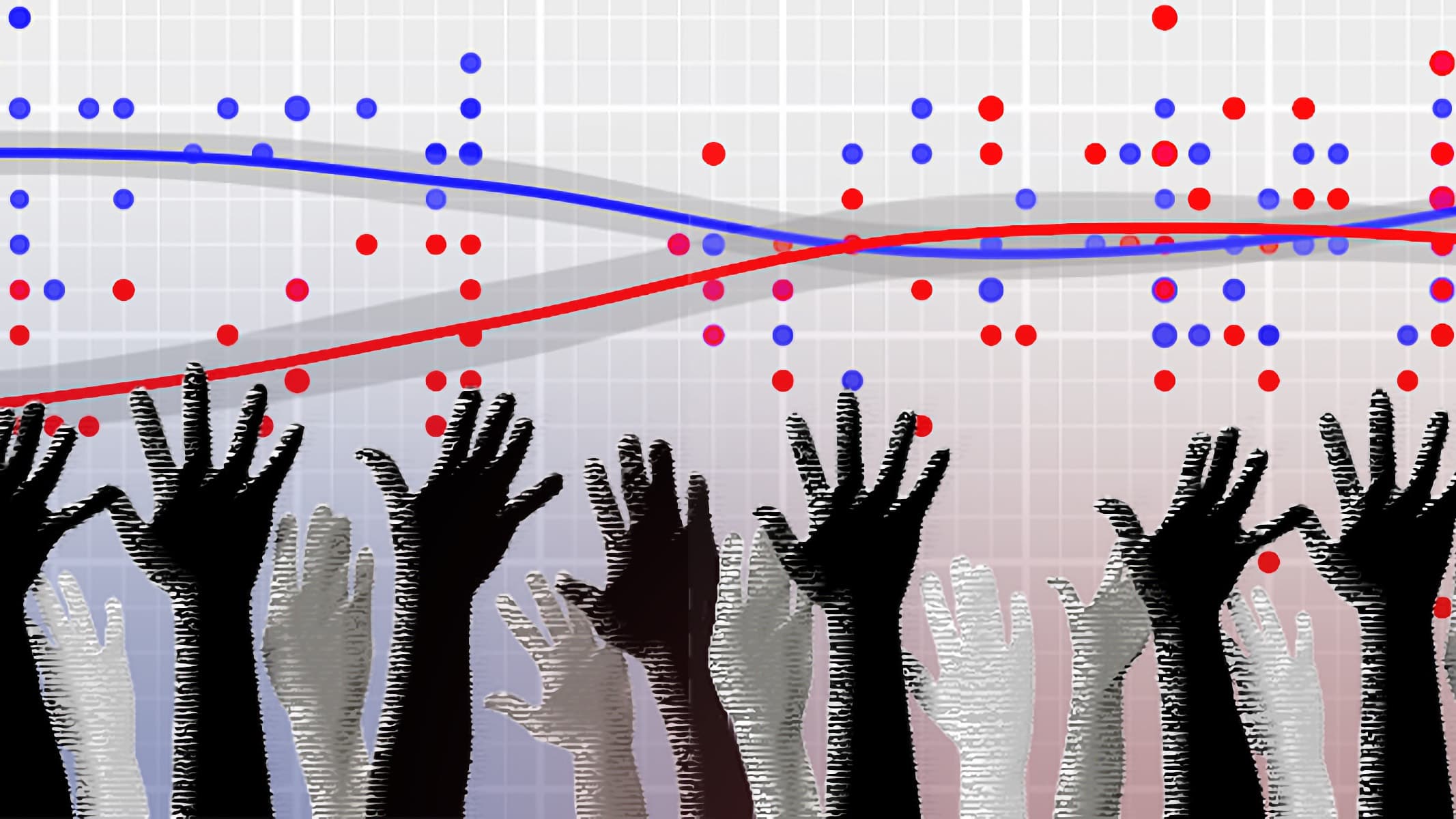
Image: California Magazine
The Americans Agree project relies on the work of independent polling organizations. It’s only because they collect the data and publicly share it that we can highlight the poll results where majorities of Democrats, Republicans, and Independents agree.
The polling world includes many players with differing goals. This post praises those who seek to measure public opinion for the public good.
The Pulse of Democracy
Modern polling—using scientific sampling of the population—emerged in the 1930s. One of its pioneers, George Gallup, said: “Public opinion polling is a means of taking the pulse of democracy.” The phrase stuck.
Gallup also observed: “Under our system of government, the people rule, and the first essential is to find out what the people want.”
These views reflected a civic purpose for polling that still survives today, at least in part of the industry. Americans Agree draws from this part of the field, which we will call “independent polling.” It seeks to neutrally and accurately capture public opinion. Polls may have sponsors—for example, media or academic organizations—but the polling is not conducted to support a preferred political or commercial outcome.
In contrast, “advocacy polling” is commissioned or performed by organizations with an agenda beyond simply measuring and reporting public opinion. Often the results are intended to support a cause, campaign, or narrative. Although advocacy polling can be done with integrity, the presence of an agenda makes the findings easier to doubt and harder to trust. For that reason, our list of poll results does not include advocacy polls, even when they come from organizations that are promoting cross-partisan causes.
The Importance of an Independent View
Modern societies depend on institutions whose job is not to take sides but to describe reality as fairly as possible. Traditional news reporting tries to describe what happened. Statistical agencies count the population, measure the economy, and track public health.
Independent polling aspires to a similar role. When done independently and transparently, polling gives citizens, journalists, and policymakers a shared reference point.
The alternative is worth considering. A world with only advocacy polling risks being a crossfire of self-serving results, with the public stuck in the middle. We see some of this in presidential elections, when campaigns reference their “internal polling” (translation: polling they won’t submit to public scrutiny). Such polling always seems to show their side either winning or at least gaining momentum.
A world of advocacy and internal polling could have no shared reference points, only spin. Luckily, on matters of high interest like presidential elections, independent polls are also conducted. Although these polls are far from perfect, they are at least trying to measure public opinion rather than manufacture a favorable impression.
Accuracy, Issues, and Horse Races
Independent polling has faced legitimate criticism in recent years, especially for underestimating Donald Trump’s results in recent elections. Pollsters face growing challenges in reaching a representative sample of the public, getting honest answers, and modeling who will actually vote. These are real problems, not minor technical issues.
In Poll Reliability, we addressed how Americans Agree is designed to avoid most of what people think of as “wrong” polls. Those polls are typically about who will win close political campaigns. In contrast, Americans Agree is about measuring points of broad agreement among Americans of different political parties. Measuring broad common ground via “issue polling” is far easier than measuring tiny differences in political horse races.
As a public service, issue polling is especially valuable because the underlying questions do not disappear when the campaign ends. Elections come and go, but the debates continue about immigration, abortion, guns, taxes, foreign policy, education, and the like.
At its best, issue polling is a way of helping a democratic society understand itself. It can show elected officials where opinion actually is, help journalists avoid mistaking elite debate for public sentiment, and give citizens a more grounded picture of what their fellow citizens think.
And when results are broken out by party identification, we can measure agreement across Democrats, Republicans, and Independents. That last point is what Americans Agree is built on.
Exemplars
Here are examples of polling efforts that have been particularly valuable to Americans Agree:
The Economist / YouGov weekly polls provide a great combination of quality, quantity, and recency in U.S. polling. A single week’s poll can have 50+ questions, some touching on news events from only days before.
Pew Research Center exemplifies an organization dedicated to polling for the public interest. It is not-for-profit, studiously nonpartisan, and regularly scrutinizes its methodologies.
Gallup is valuable for its nearly one-hundred-year polling history. For example, this page about the death penalty has results from 1937 to 2025.
The major TV networks’ news organizations (ABC, CBS, NBC, Fox) commission polls that are generally well regarded for independence.
Many universities conduct polls, often of a specialized or regional nature. For example, Marquette University Law School rotates among Wisconsin state polls and national polls that often focus on the Supreme Court.
There are many others. More generally, the members of the American Association for Public Opinion Research’s Transparency Initiative deserve credit for committing to transparency about their methods and results. When pollsters publish their survey questions, sampling methods, and (ideally) cross-tabulations, others can examine and reference the results. This makes the polling more credible and useful.
A Civic Contribution
It is easy to take for granted that independent issue polling is widely available. But conducting and publishing these polls is real work, even more so when done to high standards. That so many organizations continue to do the work—and then make it publicly available—is a true civic contribution. It continues the tradition of public service going back to George Gallup in the 1930s. It is a tradition worth praising today and sustaining going forward.